Long enough to believe I understood every part of who he was. Long enough to feel completely safe beside him.
His parents had died when he was only four years old. He remembered almost nothing about them except a handful of faded photographs and a few stories he had been told over the years.
The person who truly raised him was his great-aunt, Martha.
She wasn’t simply a relative.
She was his family, his home, and the one constant presence that never disappeared from his life.
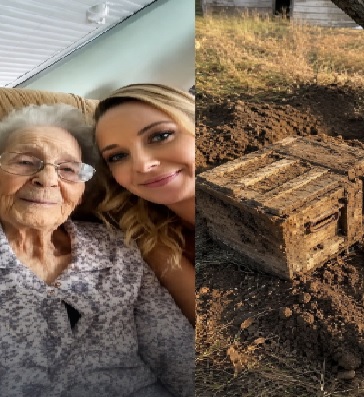
The first time I met her, I understood why he spoke about her with so much admiration.
She didn’t welcome me because she felt she had to.
She welcomed me because she genuinely wanted another person to love.
Every Sunday we visited her little house at the edge of town. She always baked the same warm apple pie, insisting that the secret ingredient wasn’t cinnamon—it was patience.
Those afternoons became my favorite part of the week.
We would sit on the porch for hours while Martha shared stories from her younger days, laughed at her own mistakes, and somehow managed to find hope even in difficult memories.
She had a quiet way of making everyone around her feel like they belonged.
Then, one autumn, little things began to change.
She misplaced her glasses.
Forgot appointments.
Asked the same questions more than once.
At first, we brushed it off as normal aging.
But the forgetfulness slowly became impossible to ignore.
One rainy afternoon, she looked at me with a gentle smile and whispered, «If one day I can’t remember your name, please don’t think I stopped loving you. Hearts remember long after minds begin to fade.»
I never forgot those words.
When the doctors confirmed the early stages of dementia, Daniel’s world seemed to collapse.
He wasn’t just afraid of losing the woman who had raised him.
He was afraid of losing the last person who remembered the little boy he used to be.
From that moment on, we spent as much time with her as we could.
We labeled drawers, covered the refrigerator with family photographs, and filled the house with handwritten reminders.
Some days she recognized us the moment we walked through the door.
Other days she would ask if I was a kind neighbor stopping by for tea.
Each time, my heart quietly broke.
One afternoon, while helping her clean the attic, we found an old wooden chest tied with a faded blue ribbon.
Inside were dozens of letters.
Every one of them was addressed to Daniel.
Each began with the same sentence:
«In case I can no longer tell you this myself…»
She had written them over many years.
One for every birthday.
One for his graduation.
One for his wedding day.
One for the day he might become a father.
And several for the moments when life would make him doubt himself.
They weren’t instructions.
They were reminders.
That he had always been loved.
That he would never truly be alone.
That pain could shape a person without defining them.
Daniel read the first letter through tears.
Then another.
And another.
Neither of us spoke for a very long time.
When Martha peacefully passed away months later, the silence she left behind felt overwhelming.
But so did the love she had carefully preserved inside those letters.
Today, they rest on the highest shelf in our living room.
We don’t read them often.
Only when life becomes heavy enough that we need to hear her voice again.
And every single time, we’re reminded of something simple but unforgettable:
People may leave this world, but the love they leave behind can continue guiding those they cherished for many years afterward.