His name was Victor.
Technically, he didn’t live on our property. Beyond our backyard stood a narrow strip of neglected land bordered by old trees and an abandoned storage shed. Years before, someone had apparently used the little wooden structure for gardening equipment. By the time I was old enough to remember it, Victor had made it his home.
The roof leaked when it rained. One window was covered with plastic. In winter, smoke sometimes curled from a rusty metal pipe he had installed through the wall.
Every evening, my mother cooked for him.
It didn’t matter whether we had roast chicken or only potatoes and soup. Before we ate, she filled another plate, covered it carefully, and carried it across the backyard.
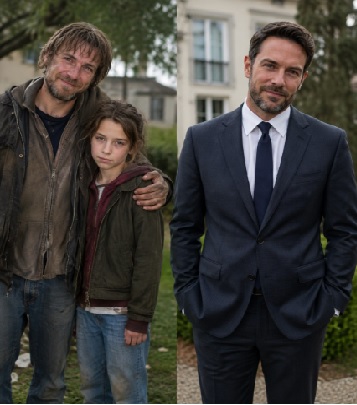
As a small child, I accepted this as normal.
As I grew older, I began to resent it.
We were not wealthy. My mother worked long hours and counted every expense. There were months when she postponed buying herself new shoes or quietly put something back on the supermarket shelf after checking the price.
Yet Victor always had dinner.
When I complained, she gave me almost the same answer every time.
«Everyone deserves to eat.»
It was a good answer, but it wasn’t the answer I wanted.
I wanted to know why him.
There were other people who needed help. Why had this particular man become part of our lives? Why did my mother worry when he was sick? Why did she wash his blankets? Why did she sometimes sit outside the shed talking to him long after sunset?
By the time I became a teenager, my curiosity had turned into jealousy.
Once, after an argument about money, I said something cruel.
«If you care about him so much, maybe he should be your daughter.»
My mother’s face changed immediately.
She didn’t shout. That somehow made it worse.
She simply looked at me for several seconds and said, «One day you’ll understand that caring about another person doesn’t mean there’s less love left for you.»
I rolled my eyes and walked away.
For years afterward, I remembered that conversation whenever I saw her carrying another plate across the yard.
A Promise I Didn’t Want to Make
Victor aged alongside my mother.
His beard became completely gray. His shoulders bent. He moved more slowly through the winters, but he refused most offers to leave the shed permanently.
My mother never forced him.
She helped where he allowed her to help.
Then she became ill.
Everything changed quickly after that.
Suddenly, the woman who had spent her life caring for everyone else needed help herself. I began spending more time at the house, driving her to appointments, buying groceries and taking care of the endless small tasks she could no longer manage alone.
Victor stopped coming to the back door.
Instead, he would stand at a distance near the trees, remove his cap and wait until my mother noticed him through the window.
Sometimes she waved.
Sometimes she was too tired.
A few weeks before she died, she asked me for one promise.
«Don’t let Victor go hungry.»
I almost laughed from frustration.
Even then, with so little strength left, she was thinking about him.
«Why?» I asked.
She closed her eyes.
«Because I promised someone once.»
«Who?»
She didn’t answer.
I assumed she had fallen asleep.
After her funeral, I considered ignoring the request.
Victor wasn’t my responsibility. I had my own life, my own bills and my own grief. My mother had chosen to care for him for twenty years. That didn’t mean I had to inherit the arrangement.
But promises made beside a dying parent’s bed have a strange weight.
So I continued.
I didn’t cook every day as my mother had. Sometimes I brought groceries. Sometimes takeaway food. Sometimes I simply left a container outside the shed.
Victor never complained.
«Thank you,» he would say.
That was usually the entire conversation.
Months passed.
Gradually, my resentment softened into habit.
Then one cold afternoon, Victor appeared at my back door.
I barely recognized him. He looked thinner than usual, and his hands were trembling.
«I have something that belongs to you,» he said.
From inside his coat, he removed a small cloth bundle.
He unfolded it carefully.
A silver locket lay in his palm.
For several seconds, I couldn’t speak.
I knew that locket.
My mother had worn it throughout my childhood.
It was oval, slightly scratched, with a tiny floral pattern around its edge. When I was little, she sometimes let me open it. Inside were two tiny photographs: one of me as a baby and another of a young man I had never recognized.
The locket had disappeared years earlier.
My mother had searched everywhere.
I remembered pulling drawers from dressers, checking coat pockets and looking beneath furniture. Eventually, she had accepted that it was gone.
Now Victor was holding it.
«Where did you get this?»
His eyes dropped toward the floor.
«Your mother gave it to me.»
I felt something hot rise through my chest.
«She told me it was lost.»
Victor nodded.
«I know.»
The Photograph Inside
I opened the locket.
My childhood photograph was still there.
So was the picture of the young man.
I held it closer to Victor’s face.
There was something familiar in the eyes.
«Who is this?»
Victor looked at the photograph for a long time.
«Your mother’s brother.»
I stared at him.
My mother had rarely spoken about her family. I knew she had grown up with a brother, but I had been told he died before I was born.
Victor asked if he could come inside.
For the first time in twenty years, the man from the shed sat at our kitchen table.
Then he told me the story my mother had never been able to tell.
Her brother’s name had been Daniel.
He and Victor had been close friends when they were young. They worked together, traveled together and, for several years, were almost inseparable.
But Daniel’s life eventually began falling apart.
He struggled with problems neither friendship nor family could easily solve. Relationships broke down. Work disappeared. He became increasingly isolated.
Victor tried to help him.
So did my mother.
Nothing was enough.
Daniel died young.
Before his death, however, Victor had made him a promise: he would look after his sister if she ever needed him.
Years later, the direction of that promise reversed.
Victor’s own life collapsed.
A workplace injury was followed by unemployment. His marriage ended. Debt accumulated. He began drinking heavily and eventually lost stable housing.
When my mother discovered him sleeping outside, she recognized the man who had once tried to protect her brother.
She offered him money.
He refused.
She offered to find him a room.
He refused that too.
What he finally accepted was food.
And later, when the abandoned shed became his shelter, she allowed him to remain nearby without treating him as a charity case.
That was why she cooked for him.
Not because he mattered more than her family.
Not because she had some secret second life.
She was repaying kindness that had been given years earlier, when someone she loved had desperately needed a friend.
«But why didn’t she tell me?» I asked.
Victor rubbed his hands together.
«Because she didn’t want Daniel remembered only for the worst part of his life.»
That answer hurt more than I expected.
I had spent years believing my mother was hiding something from me.
She had been.
But not the secret I imagined.
Why Victor Had the Locket
There was still one question.
«Why did she give you this?»
Victor touched the edge of the table.
«Because I was going to leave.»
Several years earlier, he explained, he had decided to disappear without saying goodbye. He believed my mother’s kindness had lasted long enough. He felt ashamed that she was still feeding him after so many years.
She found out.
The night before he planned to go, she visited the shed.
She gave him the locket and told him to look at Daniel’s photograph whenever he started believing that his life had no value.
According to Victor, she told him the locket wasn’t a payment.
It was a reminder.
Someone had once trusted him.
Someone had once loved him as a friend.
And someone still remembered the person he had been before his life collapsed.
Victor stayed.
My mother later told me the necklace had been lost because explaining the truth would have required explaining Daniel, Victor and a painful part of her past she had chosen to keep private.
Now she was gone.
Victor believed the locket should return to me.
I looked again at the two photographs inside.
My baby picture on one side.
Daniel on the other.
Suddenly, the object seemed to contain two versions of my mother: the woman I had known and the young sister she had been before I existed.
The Things Children Don’t See
That evening, I sat alone in the kitchen long after Victor returned to the shed.
For years, I had built an explanation from the small pieces available to me.
Mother feeds Victor.
Mother worries about Victor.
Mother gives Victor things when we don’t have much ourselves.
Therefore, Victor must somehow be more important.
It was the logic of a child.
The facts had been visible. Their meaning had not.
Children often see their parents only in relation to themselves. Mother. Father. Provider. Protector. The person who says yes or no.
It can take decades to realize that parents had entire lives before their children arrived. They experienced friendships, losses, loyalties and regrets we may know nothing about.
My mother had never simply been feeding a homeless man.
She had been preserving a chain of loyalty.
Daniel had mattered to Victor.
Victor had tried to help Daniel.
After Daniel died, my mother refused to forget what Victor had done.
Years later, when Victor became the one who needed help, she returned the kindness in the only way he was willing to accept it.
A plate of food.
Then another.
Then thousands more over twenty years.
What Changed Afterward
I didn’t suddenly become Victor’s caretaker.
That would have repeated my mother’s life rather than understood it.
Instead, I finally began talking to him.
I learned what foods he liked and which ones he politely ate because my mother had made them. I discovered that he had once repaired machinery and could identify almost any engine by its sound.
He told me stories about Daniel.
Not heroic stories.
Ordinary ones.
The time they missed a train because Daniel insisted on helping a stranger push a broken car. The terrible apartment they once rented together. The arguments they had. The jokes my uncle repeated until nobody found them funny anymore.
Through Victor, a relative I had known only as a faded photograph became a real person.
And through those stories, my mother became more real too.
Not just my mother.
A sister.
A frightened young woman.
A person who had lost someone and decided that gratitude should survive longer than grief.
Eventually, Victor accepted help finding proper housing. It wasn’t immediate, and it wasn’t easy. Years of living outside conventional society had made him suspicious of institutions and uncomfortable depending on others.
But this time, I understood something my mother had understood long before me.
Helping someone doesn’t always mean deciding what their life should look like.
Sometimes it means offering what they are able to accept and leaving their dignity intact.
The silver locket now sits in a small wooden box among my mother’s belongings.
Occasionally, I open it.
For years, I thought its disappearance represented another mystery between my mother and me.
Now it reminds me of something different.
We rarely know the complete history behind another person’s kindness.
What looks like an irrational sacrifice from the outside may be gratitude. What looks like obligation may be loyalty. What looks like weakness may be someone’s attempt to repay a debt that was never written down.
I once believed my mother had chosen Victor over me.
In reality, she had been teaching me something I was too young and too angry to understand.
Love is not always a transaction in which giving something to one person means taking it away from another.
Sometimes a meal is only a meal.
And sometimes a plate carried across a backyard every evening for twenty years is the final chapter of a promise that began long before anyone else knew the story.