Mashed potatoes look like one of the easiest dishes in the kitchen.
Peel the potatoes, boil them, mash them, add butter and milk, and dinner is ready.
At least, that is what many of us were taught.
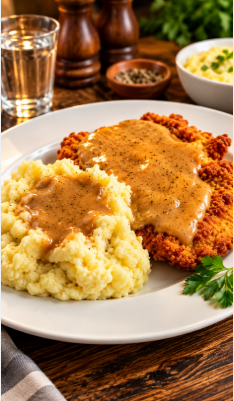
Yet anyone who has tried to make truly exceptional mashed potatoes knows that the difference between a bowl of creamy, flavorful potatoes and a disappointing, gluey mixture can come down to a few small decisions made long before the butter reaches the pan.
For years, I made mashed potatoes the same way my family always had. I cut the potatoes into pieces, dropped them into a large pot of cold water, boiled them until tender, drained them, and then started mashing.
The result was edible.
It was sometimes even good.
But it never tasted quite like the mashed potatoes my grandmother made.
Hers were different. They were rich without being heavy, creamy without becoming runny, and full of potato flavor. Most importantly, they had a texture that seemed almost impossible to reproduce at home.
Then one afternoon, while we were preparing dinner together, she watched me begin the process.
She didn’t say anything at first.
She simply observed as I filled the pot with water and added the potatoes.
Finally, she smiled.
«That’s where you’re losing the flavor.»
I assumed she was joking.
She wasn’t.
Why the Cooking Liquid Matters
The first lesson was not that boiling potatoes in water is inherently wrong. It isn’t. In fact, boiling in salted water is a perfectly legitimate and widely used method for making mashed potatoes.
The important point is that potatoes are porous vegetables. During cooking, they absorb some of the liquid around them while starches and other water-soluble compounds can move into that liquid.
If potatoes are cooked in plain, heavily diluted water and then drained, some flavor compounds and starch are inevitably left behind.
That doesn’t mean water «removes all the flavor,» as the dramatic version of this story might suggest. But it does explain why the cooking method can affect the final result.
My grandmother had a different approach.
She cooked the potatoes with a much smaller amount of liquid and added aromatic ingredients to the cooking process. Depending on the type of mashed potatoes you want, that liquid can include milk or another dairy base, although the exact technique needs to be adjusted carefully to prevent scorching.
The potatoes were not simply boiled until soft and forgotten.
They were being seasoned and flavored from the beginning.
The Potato Itself Matters More Than Most People Realize
Before changing the cooking method, there is another decision that can make an enormous difference: choosing the right potato.
Not every variety behaves the same way.
Starchy potatoes, such as russets, tend to produce a lighter and fluffier mash. Waxy potatoes hold their shape better and can produce a denser, creamier result.
Yukon Gold potatoes are popular for mashed potatoes because they naturally have a buttery flavor and a relatively creamy texture.
This means there is no single «perfect» potato for everyone.
If you want extremely fluffy mashed potatoes, a high-starch variety is often a strong choice.
If you prefer something richer and naturally creamy, a yellow-fleshed potato can work beautifully.
The important thing is understanding what you are starting with.
Cut the Pieces Evenly
My grandmother also had another rule that seemed insignificant until I understood why it mattered.
The potato pieces should be approximately the same size.
If some pieces are tiny and others are large, they won’t become tender at the same time.
The small pieces may become waterlogged and overcooked while the larger ones are still firm in the center.
That creates a difficult situation when you start mashing.
You may continue cooking the larger pieces, causing the smaller ones to absorb even more liquid.
Instead, cutting the potatoes into reasonably uniform chunks helps them cook more evenly.
It is a tiny step, but good cooking is often about controlling dozens of tiny details.
Season Earlier Than You Think
Another mistake is waiting until the very end to season the potatoes.
Salt added only after mashing can leave the outside tasting seasoned while the interior remains bland.
When potatoes are cooked in salted liquid, the seasoning has an opportunity to penetrate them more evenly.
This does not mean you should aggressively salt everything.
The amount depends on the cooking method and the other ingredients you plan to use.
But seasoning the cooking liquid is generally much more effective than treating salt as an emergency correction at the very end.
And this was another lesson my grandmother had learned through years of cooking:
Flavor should be built in layers.
It shouldn’t all be added after the food is already finished.
The Aromatics Change Everything
The most memorable part of her method was the aroma.
Instead of treating the potatoes as an isolated ingredient, she flavored the cooking process with simple additions such as garlic, herbs, or other aromatics.
The exact combination can vary.
A few garlic cloves can provide warmth and depth.
A sprig of thyme can introduce an earthy fragrance.
Rosemary can make the result more pronounced, although it should be used carefully because its flavor is strong.
The key is not to overwhelm the potatoes.
A good mashed potato should still taste like potato.
The aromatics should support the main ingredient rather than replace it.
As the potatoes cooked, the kitchen gradually filled with a smell that immediately made the dish feel different.
That was when I understood that the transformation wasn’t going to come from a final spoonful of seasoning.
It was happening throughout the cooking process.
The Most Important Step Comes After Cooking
But there was another part of the technique that mattered even more.
Once the potatoes were tender, they had to be drained properly.
Excess water is one of the enemies of flavorful mashed potatoes.
If cooked potatoes remain wet, the final mixture can become thin and difficult to control.
Some cooks even return the drained potatoes briefly to the warm pot over low heat, allowing excess moisture to evaporate.
This should be done carefully to avoid browning or drying them out.
The goal is simple:
Tender potatoes.
Minimal excess water.
Then the mashing begins.
The Second Mistake Can Ruin Everything
This was the part my grandmother emphasized most strongly.
She told me that people often become too enthusiastic once the potatoes are soft.
They mash.
Then they mash some more.
Then they decide the texture isn’t smooth enough and start stirring.
That is exactly where things can go wrong.
Potatoes contain starch.
When potatoes are cooked, their starch granules swell and become more accessible. If you aggressively beat, blend, or process the potatoes, those starches can be released excessively.
The result can be a sticky, elastic, glue-like texture.
And once mashed potatoes have reached that point, adding more butter or milk usually won’t restore the original texture.
The damage has already been done.
Never Treat Mashed Potatoes Like Cake Batter
A food processor is particularly risky.
A blender can be even more aggressive.
An electric mixer can also produce an overly worked texture if used too long.
Instead, gentle tools are generally better.
A traditional potato masher produces a rustic texture.
A potato ricer can create exceptionally smooth potatoes while minimizing the amount of mechanical force required.
A food mill is another excellent option for a very refined texture.
The key principle is the same regardless of the tool:
Process the potatoes only as much as necessary.
Once they are smooth enough, stop.
Don’t keep working them simply because you think they should become even smoother.
Sometimes the pursuit of perfection is what ruins the dish.
Warm Dairy Makes a Difference
There is another small detail that can make the final result much easier to control.
If you are adding milk, cream, or another dairy ingredient, warming it first is usually preferable to pouring it in cold.
Cold liquid can cool the potatoes abruptly and make it harder to incorporate the ingredients smoothly.
Warm butter melts readily.
Warm milk or cream blends more easily.
Add the liquid gradually rather than all at once.
This gives you control over the final consistency.
Some people prefer thick mashed potatoes that can hold their shape on a plate.
Others want a softer, silkier texture.
There is no universal answer.
The best consistency is the one you actually enjoy eating.
A Better Way to Think About the Dish
The biggest lesson I learned from my grandmother wasn’t really a secret ingredient.
It was a different way of thinking about a simple dish.
Mashed potatoes don’t become extraordinary because someone adds an enormous amount of butter or cream at the end.
They become extraordinary when every stage is handled with care.
Choose an appropriate potato.
Cut it evenly.
Season the cooking liquid.
Cook until just tender.
Control excess moisture.
Add warm dairy gradually.
And most importantly, stop mashing before the potatoes become overworked.
That final rule is especially important because it explains why two people can use almost identical ingredients and still produce completely different results.
One person treats the potatoes gently.
The other keeps beating them until they become smooth—but in doing so, turns their natural starch into the very thing they were trying to avoid.
The Recipe Is Simple. The Technique Is the Secret.
Today, I still make mashed potatoes differently from the way I did before that afternoon.
I don’t obsess over complicated ingredients.
I don’t believe that every successful recipe requires a hidden trick.
Instead, I pay attention to the small decisions.
And when I make mashed potatoes, I remember my grandmother’s most useful lesson:
The best cooking isn’t always about adding more.
Sometimes it is about knowing exactly when to stop.
A bowl of excellent mashed potatoes should be creamy but not watery, smooth but not gluey, rich but still unmistakably potato.
And if there is one mistake worth remembering, it is this:
Once the potatoes are tender, treat them gently.
Because the difference between silky mashed potatoes and a sticky disaster may be nothing more than a few seconds of unnecessary mixing.