But as the days passed, the gravel remained exactly where it was. It blocked part of the driveway, created dust whenever the wind picked up, and made access to our property more difficult.
I decided to handle the situation politely. After all, our neighborhood had always been a peaceful place where problems were solved through simple conversations. One afternoon, I walked over to his house and knocked on the door.
When he answered, I calmly explained the issue.
“Would you mind moving the gravel from in front of our house? It’s causing a few problems for us.”
I expected at least a brief apology or some understanding. Instead, he smiled and replied:
“That’s my problem. I’ll deal with it whenever I feel like it.”
The words were simple, but his tone said everything. At that moment, I realized that a friendly solution was unlikely.
I returned home and spent several days thinking about what to do. I didn’t want an argument, and I certainly didn’t want a feud with a neighbor. But I also wasn’t willing to let someone treat others with such disregard.
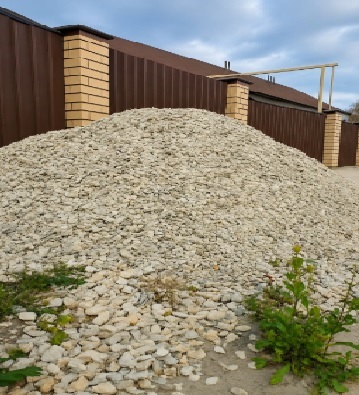
Weeks went by, and nothing changed. The gravel pile remained in place. Rain washed small stones onto the road, and passing vehicles scattered them even farther.
That’s when I decided to take action in my own way.
I began documenting everything. I took photographs, recorded dates, and carefully noted the inconvenience the gravel was causing. Then I researched local regulations and discovered that construction materials were not allowed to be stored in that location without proper authorization.
Still, I remained patient.
After another month passed without any action from him, I submitted a formal complaint to the local authorities, including all of the evidence I had collected.
The process moved slowly, but it moved forward.
One morning, I noticed an inspector examining the area. He took measurements, reviewed the site, and photographed the gravel pile himself.
A few days later, an official notice arrived for my neighbor.
I never learned exactly what it said, but the results were immediate.
Within days, trucks arrived, workers appeared, and the gravel began to disappear. The same man who had confidently told me he would handle the situation whenever he wanted was suddenly in a hurry to solve the problem.
By the end of the week, the entire pile was gone.
I assumed that would be the end of the story.
But surprisingly, something else changed.
From that moment on, the neighbor began avoiding me completely. Whenever we happened to be outside at the same time, he would turn away or pretend not to notice me. If we crossed paths on the street, he would look at his phone or walk in the opposite direction.
At first, I found it a little strange. Eventually, however, I realized it wasn’t really about the gravel.
He had probably expected nobody to challenge him. He likely believed that his decision would be the final word. When the matter was handled through official channels and he was forced to face the consequences, things didn’t go the way he had planned.
The experience taught me an important lesson.
Not every conflict needs shouting, threats, or revenge. Sometimes the most effective response is to stay calm, gather facts, and let the proper process do its job.
Had I reacted emotionally, the situation might have turned into a never-ending argument. Instead, patience and persistence achieved what anger never could.
Today, our street is peaceful again. There is no trace of the gravel pile, and life has returned to normal.
Occasionally, I still see the neighbor outside, but he continues to keep his distance.
I don’t hold any resentment toward him. In fact, I rarely think about the incident anymore. But every now and then, when I pull into my driveway and see the clear space where the gravel once sat, I remember his words:
“That’s my problem. I’ll deal with it whenever I feel like it.”
In the end, he did deal with it.
The only difference was that the timeline was no longer his choice.
And that is why I have never regretted the way I handled the situation. Sometimes being polite is enough. Other times, being polite and determined is what truly makes the difference.
Since then, the neighbor has avoided any direct interaction with me, and honestly, that suits me just fine.