The supermarket line was long. People were irritated, children were crying, and someone nearby was arguing about the prices. In front of me stood a tired woman with empty eyes. Around her were five children. One was pulling at her sleeve, another sat on the floor, the youngest girl begged for chocolate, and the oldest boy quietly returned groceries to the shelf because, once again, there wasn’t enough money.
And do you know what shocked me the most?
Not the poverty.
Not the worn-out clothes.
Not the almost empty shopping cart.
But the way this woman looked at everyone around her… as if the whole world owed her something.
When the cashier announced the total, the woman sighed loudly and said:
— In this country, it’s impossible to live normally. The government should be responsible for helping large families.
People around us nodded sympathetically. Someone even paid for part of her groceries.
But I felt something completely different.
No, I feel sorry for the children. Deeply sorry.
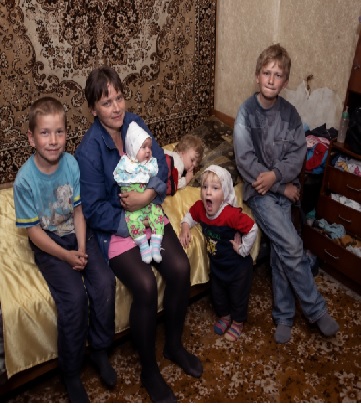
But I can no longer automatically sympathize with adults who continue making the same decisions over and over again… and then blame the entire world for the consequences.
Many people will hate these words. I’ve already been called cruel, heartless, selfish. But nobody wants to say out loud what thousands quietly whisper to each other.
Why would someone choose to have a fifth child when they can barely provide for the first four?
Since when did responsibility become “judgment”?
Why does every question based on common sense instantly become a scandal?
I grew up in a poor family too. Extremely poor. Sometimes we had no electricity. My mother washed other people’s clothes by hand late at night. My father worked nonstop and still secretly cried when there was no food left in the house.
But my parents always said one thing:
— We have no right to force a child to suffer the same life.
That’s why they had only one child. Me.
Not because they didn’t love children.
But because they understood responsibility.
Today, everything feels different.
Now people think it’s completely normal to have children without a plan, without money, without stability, without even knowing how those children will live five years later. Then they upload videos online saying:
“Please help us, we have nothing to eat.”
And thousands of people send money.
Again.
And again.
And again.
But nobody asks the most important question:
Where is the line between bad luck and irresponsibility?
Recently, I saw a story about a family with eight children. They lived in a collapsing house. Mold covered the walls. There was no heating. A little girl slept on an old mattress beside a damp wall.
And while journalists filmed this “touching story,” the mother admitted she dreamed of having another baby.
I watched in shock.
Because children are not decorations.
Not a way to receive benefits.
Not tools for gaining sympathy online.
Children are human lives.
Real lives.
Every child deserves safety. Proper food. A warm bed. A peaceful childhood. Not endless stress, debts, arguments, and the feeling that they are just another burden in the house.
But try saying this out loud — people will immediately call you a monster.
Society is afraid of honest conversations.
We have become used to romanticizing the suffering of poor families, as if having many children automatically makes parents heroes.
But it doesn’t.
Sometimes it is a story of love and incredible strength.
Other times, it is a story of irresponsibility, and the children carry the consequences for the rest of their lives.
And the saddest part is that children understand everything.
They see their parents counting coins.
They hear the arguments at night.
They notice when the electricity gets shut off.
They feel ashamed of their clothes at school.
They pretend they are not hungry so the younger children can eat.
I know this because I was one of those children.
And that is exactly why I cannot pretend that poverty in large families always deserves admiration and sympathy.
Sometimes it is a tragedy created by the adults themselves.
Yes, there are illnesses.
Wars.
Lost jobs.
Terrible misfortunes.
But when someone repeatedly makes decisions knowing their children will grow up in misery — why should everyone pretend it is only “bad luck”?
The most painful thing is still people’s reaction.
The moment someone says:
“Maybe people should first build a stable life before having children.”
A scandal immediately begins.
Because the truth is uncomfortable.
It destroys the beautiful illusion where every poor person is automatically a saint and every difficult question is considered cruelty.
But children should never have to pay for adults’ mistakes.
Never.
And as long as society is afraid to admit this, more and more children will continue growing up in fear, hunger, stress, and hopelessness instead of safety and love.
Many people will hate me for saying this.
But maybe someone will finally ask themselves the question they were always afraid to say out loud:
What truly matters more —
simply having children…
or being able to give them a truly достойная life?